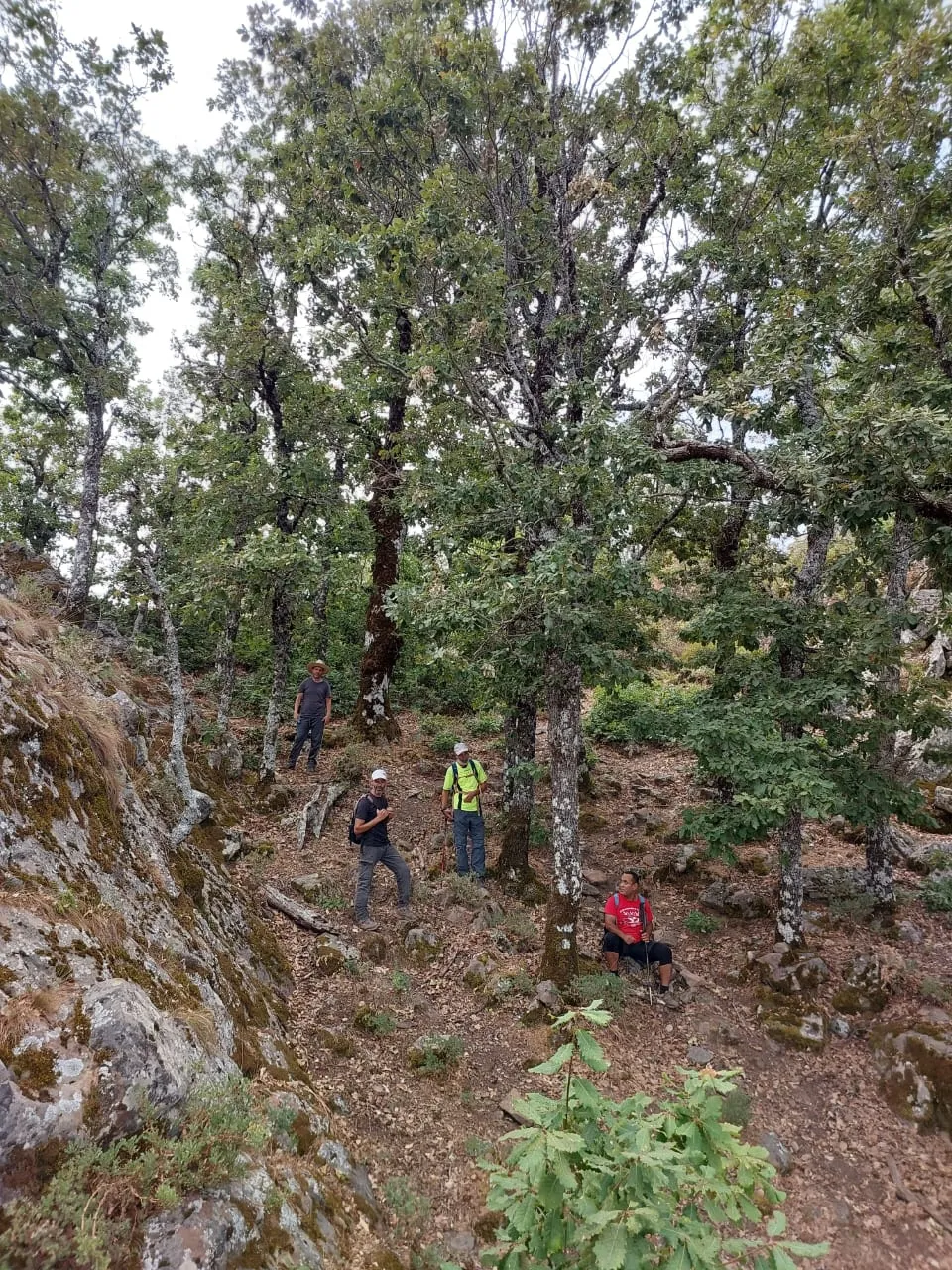
'How do you say hiking in Arabic?' Many people on my outings ask me this, especially those who learned their mountain vocabulary in French or English. The answer is that no single Arabic word fits every case: the translation changes with the length and type of walk, and with whether you are speaking standard Arabic or Moroccan Darija.
In this article, as a mountain guide in Tetouan and Chefchaouen, I give you the right translation for 'hiking', then a practical glossary of the words you actually hear on the trail: in Arabic, French and English, plus what mountain people say in Darija.
The short answer
- Nuzha (نزهة) or tanazzuh (تنزّه): for a short, easy walk.
- Rihlat mashy (رحلة مشي): an organised walk in nature, the closest match for 'hike'.
- Al-mashy al-jabali (المشي الجبلي): mountain hiking.
- Al-mashy li-masafat tawila (المشي لمسافات طويلة): long, sporty routes and trekking.
- In Moroccan Darija: 'kharja' (خرجة), the word you will hear most in Morocco.
How do you translate 'hiking' into Arabic?
These are the most common French walking words, with their Arabic and English equivalents and when to use each:
| French | Arabic | English | When to use it |
|---|---|---|---|
| randonnée | رحلة مشي، المشي في الطبيعة | hike, hiking | The general word for an organised walk |
| balade, promenade | نزهة، تنزّه | walk, stroll | A short, easy walk |
| randonnée en montagne | المشي الجبلي | mountain hiking | Walking on mountain trails |
| randonnée pédestre | التجوال سيرًا على الأقدام | hiking on foot | To set it apart from cycling or riding |
| trek, grande randonnée | المشي لمسافات طويلة، رحلة عدة أيام | trek, long-distance hike | A long route or several days in the mountains |
| randonneur, randonneuse | مشّاء، ممارس المشي الجبلي | hiker | The person who hikes |
| randonner | يمشي في الطبيعة، يتجوّل سيرًا | to hike | The verb |
| sortie | خرجة | outing | The most common word in Morocco |
How do you say 'jbel' (mountain) in French and English?
'Jbel' (جبل) means mountain; in French it is montagne. In place names the Arabic form is usually kept: Jbel, Djebel or Jebel, as in Jbel Lakraa or Jbel Kelti. 'Summit' in Arabic is qimma (قمة), sommet in French.
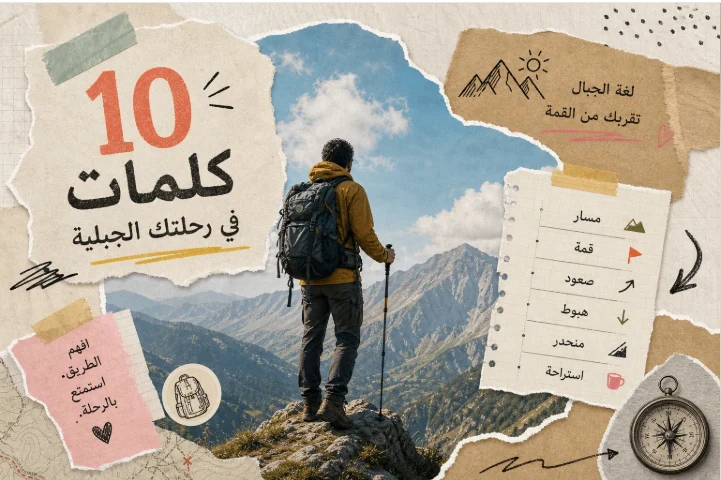
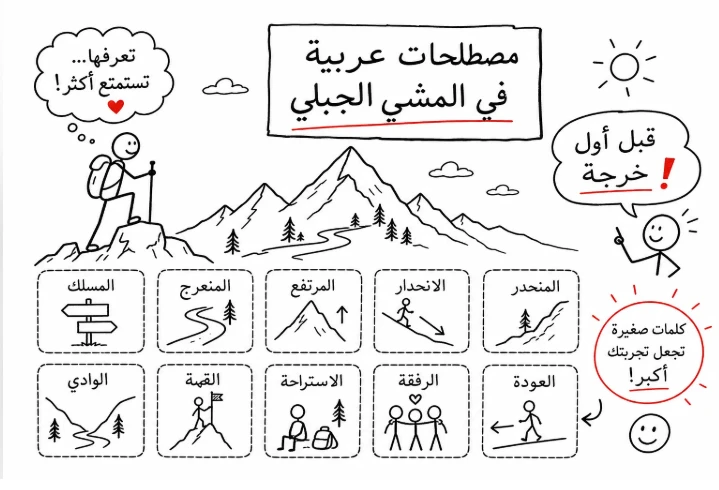
Words for the landscape: trail, summit, valley
| Arabic | French | English |
|---|---|---|
| مسار، مسلك | sentier, itinéraire | trail, route |
| جبل | montagne | mountain |
| قمة | sommet | summit |
| سفح | versant | mountainside |
| حافة، خط القمم | crête | ridge |
| ممر جبلي | col | pass |
| وادٍ | vallée, oued | valley, river |
| مضيق | gorges | gorge |
| شلال | cascade | waterfall |
| عين، نبع | source | spring |
| غابة | forêt | forest |
| مرعى | pâturage | pasture |
| دوار | douar, hameau | hamlet, village |
| منعرج | virage, lacet | bend, switchback |
| كهف | grotte | cave |
Words for walking: climb, descent, break
| Arabic | French | English |
|---|---|---|
| صعود | montée | climb, ascent |
| نزول، هبوط | descente | descent |
| منحدر | pente | slope |
| استراحة | pause | break, rest |
| الوتيرة | rythme | pace |
| الارتفاع | altitude | altitude, height |
| فارق الارتفاع | dénivelé | elevation gain |
| المسافة | distance | distance |
| المدة | durée | duration |
| نقطة الانطلاق | point de départ | starting point |
| ذهاب وإياب | aller-retour | out and back |
| حلقة | boucle | loop |
| العودة | retour | way back |
| الرفقة | compagnons de marche | walking companions |
| مستوى الصعوبة | niveau de difficulté | difficulty level |
| سهل، متوسط، صعب | facile, moyen, difficile | easy, moderate, hard |
Three numbers describe any route: distance, elevation gain and time. For example, the Jbel Lakraa climb is about 16 km, with 1,050 m of ascent, in roughly 7 hours. Elevation gain matters more than distance when judging how tiring a walk will be.
Gear words: what goes in your pack
| Arabic | Darija | French | English |
|---|---|---|---|
| حقيبة ظهر | صاك | sac à dos | backpack |
| حذاء المشي | صباط ديال الجبل | chaussures de randonnée | hiking boots |
| عصا المشي | عصا | bâtons de marche | walking poles |
| سترة واقية من الريح | جاكيطة | coupe-vent | windproof jacket |
| قارورة ماء | قرعة ديال الما | gourde | water bottle |
| مصباح رأسي | البيل | lampe frontale | head torch |
| قبعة | طاقية | chapeau | hat |
| واقي الشمس | كريمة ديال الشمس | crème solaire | sun cream |
| خريطة | خريطة | carte | map |
Download the free printable gear list in Arabic, French and English
Weather and safety words
| Arabic | French | English |
|---|---|---|
| الطقس | météo | weather |
| ضباب | brouillard | fog |
| ثلج | neige | snow |
| مطر | pluie | rain |
| ريح | vent | wind |
| مرشد جبلي | guide de montagne | mountain guide |
| إسعافات أولية | premiers secours | first aid |
| حالة طوارئ | urgence | emergency |
Darija words you will hear in the northern mountains
On outings, participants and villagers speak Darija far more than standard Arabic. These words will help you follow what is being said:
| Darija | Meaning | French | English |
|---|---|---|---|
| خرجة | group outing | sortie | outing |
| الطلوع | the climb | montée | climb |
| الهبوط | the descent | descente | descent |
| عقبة | a steep climb | raidillon | steep climb |
| الما | water | eau | water |
| دوار | small mountain village | douar | hamlet |
| عين | spring | source | spring |
| شوية بشوية | slowly, step by step | doucement | slowly |
Useful phrases with your guide
| Arabic | French | English |
|---|---|---|
| كم تستغرق الرحلة؟ | Combien de temps dure la randonnée ? | How long is the hike? |
| ما مستوى الصعوبة؟ | Quel est le niveau de difficulté ? | How hard is it? |
| أين نقطة الانطلاق؟ | Où est le point de départ ? | Where do we start? |
| هل يوجد ماء في الطريق؟ | Y a-t-il de l'eau en chemin ? | Is there water on the way? |
| كم بقي للوصول إلى القمة؟ | Combien reste-t-il jusqu'au sommet ? | How far is it to the summit? |
| أحتاج إلى استراحة. | J'ai besoin d'une pause. | I need a break. |
| لنمشِ ببطء من فضلك. | Marchons plus lentement, s'il vous plaît. | Let's walk more slowly, please. |
Darija phrases you will need on the trail
These short phrases are enough to tell your guide how you are at any moment. Do not hesitate to use them: your guide wants to know if you are tired or feel unwell before a small problem becomes a big one.
| Darija | Meaning |
|---|---|
| عييت شوية | I'm a bit tired |
| راسي كيدور | I feel dizzy |
| رجلي كتوجعني | my leg hurts |
| بغيت ندير استراحة | I want to take a break |
| واش كاين الما قريب؟ | is there water nearby? |
| كاين مشكل | there's a problem |
| أنا مزيان / مزيانة | I'm fine |
A short dialogue between a hiker and the guide
Here is a made-up dialogue for illustration, inspired by the kind of exchange you hear on trails such as the Akchour waterfalls:
| Speaker | Darija | Translation |
|---|---|---|
| Guide | لاباس؟ كلشي مزيان؟ | All good? Everything OK? |
| Hiker | عييت شوية، بغيت نوقف شوية. | I'm a bit tired, I'd like to stop for a moment. |
| Guide | واخا، هنا نديرو استراحة. شرب الما وكول شي حاجة. | Fine, we'll stop here. Drink some water and eat something. |
| Hiker | شحال باقي لراس الجبل؟ | How far is it to the top? |
| Guide | باقي غير ربع ساعة. العقبة الكبيرة خلاصنا منها. من بعد الطريق ساهلة. | Just a quarter of an hour left. We're past the big climb; it's easy from here. |
| Hiker | واخا، يلا نكملو. | OK, let's keep going. |
Just six lines, and everything is there: checking how you are, asking for a break, asking how far is left and agreeing to carry on. You need no more than this to talk to your guide with confidence.
Your first outing starts with one word
You do not need a whole dictionary before your first outing. A handful of key words is enough to start safely, and you will learn the rest as you walk. Mountain language is not book language: it takes its meaning from the effort, the air and the view.
Why a guide changes everything
A mountain guide does more than lead the way: they translate, explain and reassure. When you hear 'bechwiya hna, ttriq zelqa' (slowly here, it's slippery), it is not an order but field experience in three words. A beginner who cannot tell the Jbel Lakraa climb from the Bouhachem loop finds in the guide someone who picks a route that fits their level, rather than dragging them beyond what they can manage.
Put these words to use on a short guided walk
The best way to make these words stick is to hear them on the trail. To start, I suggest a short, easy outing such as the Chrafat waterfalls (about 3 hours) or Akchour and God's Bridge (about 4 hours). Tell me the date and the number of people, and we will sort out the rest.
Book a short outing with guide Imad
In short: hiking in Arabic in three words
The rule is simple: 'nuzha' for a gentle stroll, 'rihlat mashy' for a proper walk in nature, and 'al-mashy li-masafat tawila' when the route is long and sporty. In Darija, 'kharja' sounds more natural than any literal translation. Knowing these differences makes talking to your guide clearer from the very first message.
But mountain vocabulary is not learned from lists; it sticks when you hear it in context, walking a real trail. Message guide Imad Ben Yahya to book a hike in Tetouan or Chefchaouen, and you will be using these words before you reach the summit.
Frequently asked questions
How do you say hiking in Arabic?
It depends: 'rihlat mashy' (رحلة مشي) for hiking in general, 'al-mashy al-jabali' (المشي الجبلي) in the mountains and 'al-mashy li-masafat tawila' (المشي لمسافات طويلة) for long routes. In Moroccan Darija: 'kharja' (خرجة).
What is the difference between nuzha and rihlat mashy?
A nuzha (نزهة) is a short, easy stroll, often near town. A rihlat mashy (رحلة مشي) is an organised walk in nature, with a set route, duration and difficulty.
How do you say jbel in French and English?
Mountain in English, montagne in French. In place names it is often written Jbel or Djebel.
How do I book a hike with Imad Ben Yahya?
Through the booking page on randonnee.ma or on WhatsApp: you choose the trail, the date and the number of people, then we agree the details. Outings run in Tetouan and Chefchaouen for groups of 1 to 12 people.
What does the organisation include?
When you book, we agree transport, meals and accommodation according to the programme, and we follow the weather before setting off. Groups are small, 1 to 12 people, so everyone gets attention. The price depends on group size and is set on request.
Are the outings suitable for beginners?
Yes. There are easy routes such as the Chrafat waterfalls (about 3 h) and Akchour with God's Bridge (about 4 h), and hard ones such as Jbel Lakraa for walkers used to long days. Tell the guide your level and he will suggest the right route.
What should I bring?
Walking shoes with good grip, at least two litres of water, a light windproof jacket and a snack, in a small backpack. Bring only the essentials: the weather changes in the mountains, and a heavy pack tires you out.