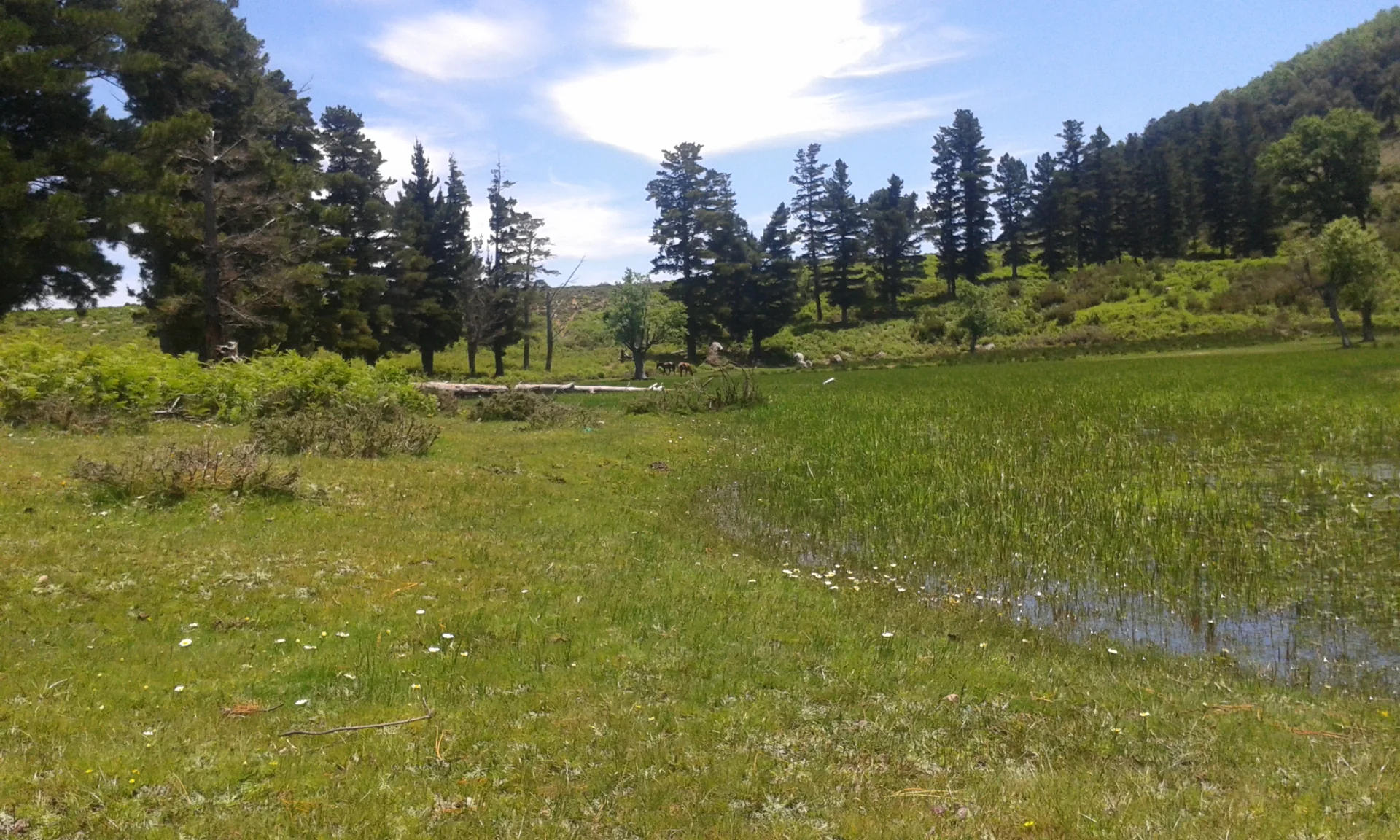
Between Tetouan, Chefchaouen and Larache lies a forest that few visitors know: Bouhachem forest. There is no famous waterfall and no crowd, just cork oaks and oaks, springs, green meadows and quiet douars on the slopes. It is the place I suggest to anyone who wants a day in nature away from the busy roads to Akchour and Ras el Ma.
In this guide I bring together what you should know about Bouhachem before you go: where it is, why it is a protected area, which animals live there, when to go and how to walk there respectfully. The details of the loop I lead groups on are on the trail page.
Bouhachem forest at a glance
- Location: between Tetouan, Chefchaouen and Larache; the massif is shared by the three provinces.
- North side: the commune of Beni Leit, about 50 km south of Tetouan.
- South part: the commune of Tanaqob, Chefchaouen province.
- Status: a Site of Biological and Ecological Interest (SIBE), known as Bouhachem nature park.
- Landscape: cork oaks and oaks, springs, meadows and mountain douars.
- Hiking: a loop of about 11 km, 450 m of ascent, about 4.5 hours, moderate level.
Where is Bouhachem forest?
Bouhachem forest lies in the heart of the Jbala country, between three towns: Tetouan to the north, Chefchaouen to the east and Larache to the west; the three provinces share the massif. Its north side belongs to the commune of Beni Leit, in Beni Hassan country, about 50 km south of Tetouan. Its south part is in the commune of Tanaqob, Chefchaouen province, a truly mountainous commune: mountains cover about 87% of its area and natural forest about 57%.
In the south of the park rises Jbel Souakna, which Hassan al-Wazzan, known as Leo Africanus, mentions in his 'Description of Africa' as Jbel Beni Jebara. So Bouhachem is no new discovery but a mountain with a long history alongside its people.
Read more about Bouhachem and its villages in the rando.ma encyclopedia
How to get to Bouhachem forest
There is no single entrance to Bouhachem forest, but many douars around its edges. So the starting point depends on the town you come from: from Tetouan we head for the north side near Beni Leit; from Chefchaouen we pick a douar closer to the south part. The roads to the douars are mountain roads, and some end as dirt tracks.
What you will find in Bouhachem forest
Bouhachem is a dense forest, rich in cork oaks and oaks. You walk on shaded paths between the trees, then come out onto open meadows dotted with big boulders and small streams; in spring the shrubs flower around their edges. And there is water almost everywhere: springs where people and livestock drink, and wet meadows after rain.
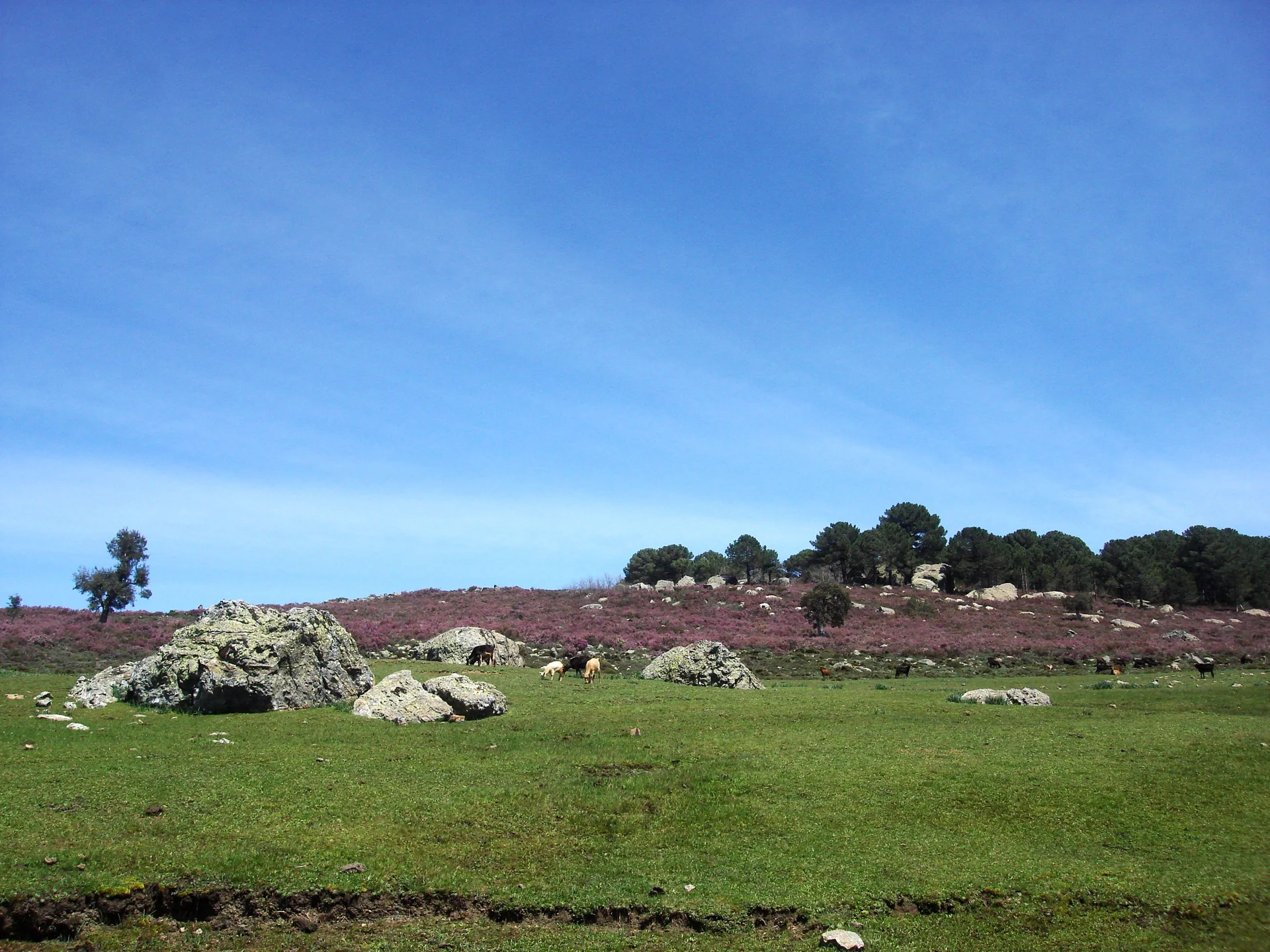
The forest is not empty of people: on its edges are douars that live from herding and farming, and you will pass herds of goats and cows and small fields. This is part of Bouhachem's spirit: nature that people have lived in for centuries, not a fenced garden.
The Barbary macaque and Bouhachem's wildlife
Bouhachem is one of the main strongholds of the Barbary macaque, which we call 'zaatout' in Darija, an endangered species. A field survey carried out in 2010 estimated about 1,500 macaques in the oak forests of Bouhachem alone. These monkeys live on rocky wooded slopes and in steep ravines, away from people, so you will not see them on every outing.
According to data from an ecotourism project at Bouhachem published in 2010, the site holds 32 mammal species, 91 nesting bird species and 17 reptile species; its rare or threatened species include the otter, alongside the macaque. The same data say the panther and the hyena have disappeared from the area.
- Never feed the monkeys: food changes their behaviour and harms them.
- If you come across them, keep your distance, speak quietly and let them go their way.
- Never buy a baby monkey or pose with a chained one: this trade is one of the biggest threats to the species.
Why is Bouhachem protected?
Bouhachem was designated a Site of Biological and Ecological Interest (SIBE) for the richness of its forests and wildlife. The forest was long logged for its timber, and some tracks opened during the Spanish protectorate still cross it. Today it faces well-known threats: overgrazing, fire, wood cutting and clearing to extend farmland.
That is why, on my outings, I make sure the walk passes through the douars and benefits the people who live there, and I keep to a few simple rules I never bend: no fire, no litter, no picking, no disturbing the animals.
Read also: leave no trace in the Rif mountains
Hiking in Bouhachem forest: the loop
The loop I lead groups on is about 11 km long, with about 450 m of ascent, taking around four and a half hours, and its highest point is about 1,300 m. The level is moderate: the climb is gradual and suits anyone with a little walking experience who wants a calm day in nature.
| Stage | What you find |
|---|---|
| Start from the douar | You enter the forest on a wide track |
| The cork oak forest | A shaded path between the trees |
| The spring | A break and lunch by the water |
| Loop back | Through another douar before returning |
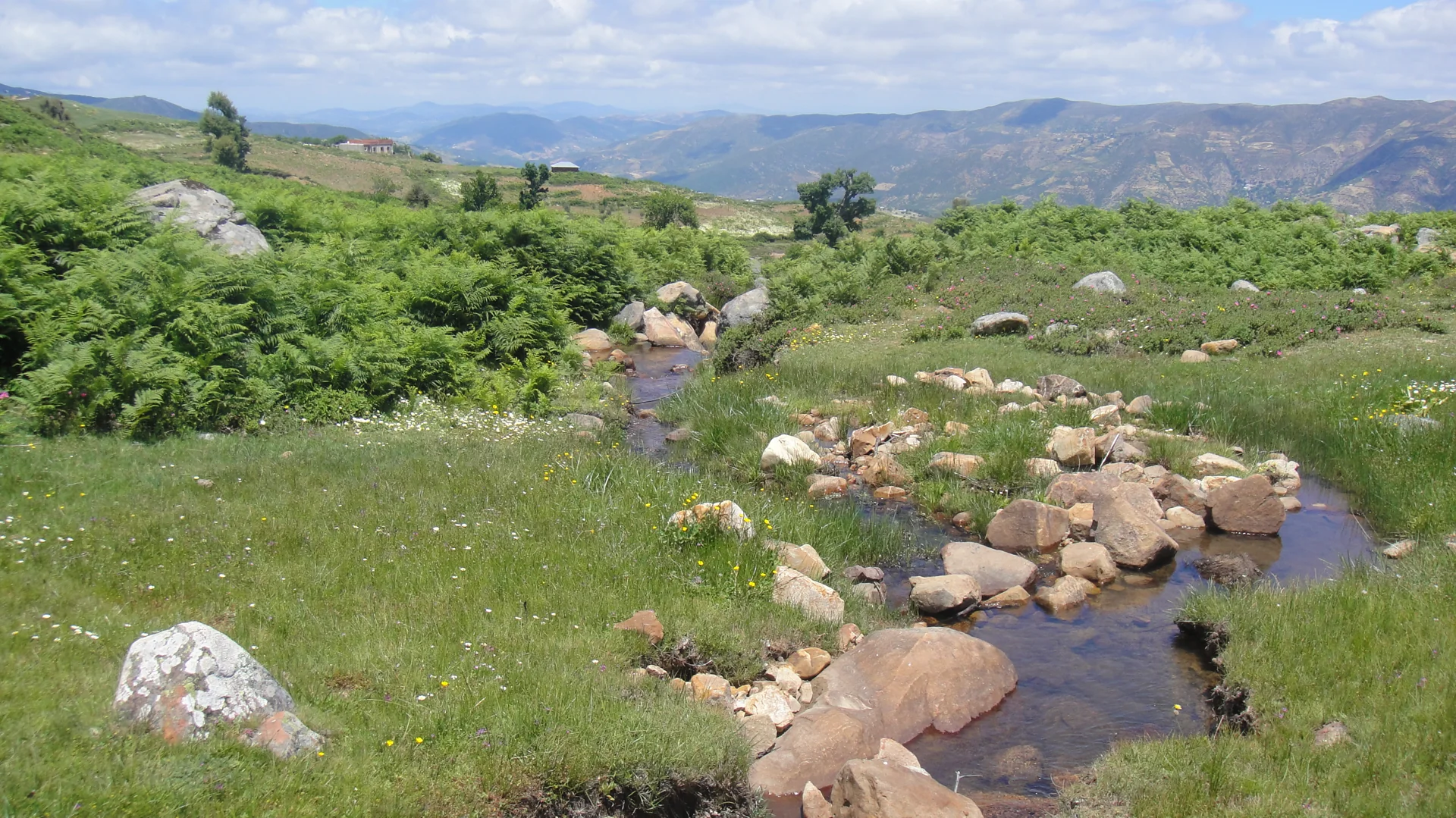
Bouhachem trail details and booking
Best time to visit Bouhachem forest
| Season | Months | Note |
|---|---|---|
| Spring | March, April, May, June | Best time: full springs and green meadows |
| Autumn | September, October, November | A very good time, with mild weather |
| Summer | July, August | Possible thanks to the forest shade, with an early start |
| Winter | December, January, February | Possible on dry days; muddy paths after rain |
April is when people search for Bouhachem forest the most, and no wonder: spring is its finest season. But autumn is also a wonderful season, and the forest is quieter.
Read also: the best seasons for hiking in northern Morocco
How to prepare for a day at Bouhachem
- Carry at least two litres of water, even though there is a spring on the way.
- Good-soled boots: the paths can be muddy after rain.
- Fog can rise quickly between the trees: stay close to the group.
- A warm layer and a rain jacket: it is cooler in the forest than in town.
- In summer, start early and make the most of the forest shade.
- Children used to walking can join from about 9 years old. For younger ones, the Chrafat waterfalls are an easier choice.
Read also: what to pack for a day hike
Visiting Bouhachem with guide Imad
I run outings to Bouhachem forest from Tetouan or Chefchaouen for groups of 1 to 12 people. The forest has many similar-looking paths and fog can cover them quickly, so I choose the douar and the starting point according to your town and adapt the pace to the group's level. Tell me the date and the number of people, and I will send you a quote.
Request a Bouhachem forest outing
More nature spots nearby
- The Chrafat waterfallsAn easier option for families and young children.
- God's Bridge, AkchourA riverside trail to the natural rock arch and the waterfalls.
- Talassemtane parkMoroccan fir forests and the highest peaks of the western Rif.
- Nature around ChefchaouenThe waterfalls and the finest natural spots around the town.
Bouhachem forest FAQ
Where is Bouhachem forest?
Between Tetouan, Chefchaouen and Larache. Its north side is in the commune of Beni Leit, about 50 km south of Tetouan, and its south part in the commune of Tanaqob, Chefchaouen province.
What is the difference between Bouhachem forest, Jbel Bouhachem and Bouhachem park?
They are names for the same place: a forested massif, designated a Site of Biological and Ecological Interest and known as Bouhachem nature park. It is also spelled Bouhachem or Bou Hachem.
Are there monkeys in Bouhachem forest?
Yes, Bouhachem is one of the main strongholds of the Barbary macaque; a 2010 survey estimated about 1,500 in its oak forests. But they live on steep slopes away from people, so you will not see them on every outing, and you must never feed them.
How long is the Bouhachem hike?
The loop I guide is about 11 km, with about 450 m of ascent, in around 4.5 hours; the highest point is about 1,300 m. Moderate level.
When is the best time to visit Bouhachem?
From March to June and from September to November. Summer is possible thanks to the forest shade with an early start, and winter on dry days.
How do I get to Bouhachem from Tetouan or Chefchaouen?
From Tetouan we head for the north side near Beni Leit, about 50 km away; from Chefchaouen we pick a douar closer to the south part. The meeting point and transport are agreed when you book.
Is Bouhachem forest suitable for children?
Yes for children used to walking, from about 9 years old. For younger ones, the Chrafat waterfalls are easier.
Do I need a guide in Bouhachem forest?
The forest has many similar paths and fog can cover them quickly. Guide Imad knows the paths and the douars and leads groups of 1 to 12 people from Tetouan or Chefchaouen.
Bouhachem does not dazzle at first sight the way a waterfall does, but it stays with you: the calm of the trees, the spring water, the welcome of the douars. Tell me the date and the number of people, and I will suggest the right day for you.